
How to Choose Foundation Shade
Match 4 things: skin depth, undertone, face-to-neck transition, and dry-down color. Learning how to choose foundation shade becomes easier when you test 2–3 close options on your jawline. Check the blended shades in daylight before buying. Then wait for the formula to dry and confirm the color stays balanced.
A wrong foundation can look orange, pink, yellow, grey, or disconnected from your neck. Store lighting can hide those problems. Seasonal tanning can also change your shade depth. A reliable process protects your budget and gives your makeup a more natural finish.
What 4 Checks Help You Choose Foundation Shade Correctly?

Use 4 checks: depth, undertone, transition, and dry-down. That framework explains how to choose foundation shade without relying on 1 quiz.
Check Skin Depth First
Choose the general depth that matches your visible complexion. Common depth families include fair, light, medium, tan, deep, and rich. Compare nearby families when your skin sits between 2 categories.
Skin depth can change through the year. Sun exposure can deepen your summer shade while winter reduces visible tan.
Check Undertone Second
Identify warm, cool, neutral, or olive undertones before selecting a final bottle. Undertone describes the hue beneath your surface skin color. Your undertone stays more stable than seasonal depth.
Warm skin often shows golden, yellow, or peach tones. Cool skin often shows pink, red, or blue tones. Neutral skin balances warm and cool tones. Olive skin often shows yellow-green or muted golden tones.
Check Face-to-Neck Transition
Blend your shortlist from the lower cheek across the jawline toward the neck. The best shade should create a smooth transition. Do not force your neck to match a visibly different face color.
How to choose foundation shade also depends on your chest when your neck stays covered from sunlight. Compare visible areas that appear together.
Match Uneven Face and Neck Color
Choose the transition that looks natural across your visible complexion. Facial redness, tanning, pigmentation, and sunscreen habits can change surface color. Your neck can stay lighter because clothing blocks sunlight.
How to choose foundation shade becomes harder when one area differs strongly. Test a middle shade that connects both areas without turning either area orange. Use concealer for local discoloration rather than changing the full foundation shade.
Check the upper chest when your neckline exposes that area. A connected face, neck, and chest looks more natural in photographs.
Check Dry-Down Before Buying
Wait before judging the final shade. Some formulas look different after the liquid base settles. A foundation can become darker, warmer, or duller after drying.
Use the final dry-down color for your decision. Fresh swatches can mislead you.
Recheck a New Formula Even with a Familiar Shade Name
Test every new formula even when the brand uses a familiar shade label. Different formulas can use different pigment balances. A matching name does not guarantee matching color.
How to choose foundation shade stays formula-specific. Compare the new formula on your jawline and let the swatch dry fully. Recheck undertone, depth, and daylight before treating the shade as equivalent.
How to Choose Foundation Shade by Undertone

To choose foundation shade by undertone, compare warm, cool, neutral, and olive options within the same depth family. How to choose foundation shade becomes much easier after you separate depth from undertone.
Choose Warm Undertones
Choose warm foundation when golden, yellow, or peach tones blend naturally into your skin. Gold jewelry can provide one clue. Green-looking wrist veins can provide another clue.
Treat those clues as starting points. Actual face swatches give stronger evidence than jewelry or veins alone.
Choose Cool Undertones
Choose cool foundation when rosy, pink, or bluish tones match your complexion. Silver jewelry can provide one clue. Blue or purple veins can provide another clue.
Surface redness does not automatically mean cool undertones. Red cheeks can sit over neutral, olive, or warm undertones.
Choose Neutral Undertones
Choose neutral foundation when very warm or very cool shades look obviously wrong. Neutral shades usually balance yellow and pink tones. A balanced shade should disappear more easily across the jawline.
Khayest's Masarrat shade guide gives an example of matching foundation through both skin depth and undertone.
Choose Olive Undertones
Choose olive foundation when warm shades turn orange and cool shades turn pink or grey. Olive complexions often show muted yellow-green depth. Pakistani and South Asian complexions can include olive undertones across different skin depths.
The vein test often creates confusion for olive skin. Green, blue, and purple veins can appear together. Use actual shade comparisons instead.
Where Should You Test Foundation Shade?
Test foundation where your face meets your neck, not only on your hand. How to choose foundation shade correctly depends on testing the area people will actually see.
Test 3 Shades Along the Jawline
Apply 3 close shades in narrow stripes along your lower cheek and jawline. Keep each stripe about 1 inch (2.5 cm) long. Blend the edges slightly instead of leaving thick product lines.
The closest match should disappear with minimal blending. Remove the obvious mismatches first.
Avoid Final Matching on Hands
Use your hand only to compare texture or narrow a large shade range. Hands often receive different sun exposure than faces. Wrists can also look lighter than your face or chest.
Do not buy foundation because a wrist swatch looks perfect. Confirm the shade on your jawline.
Compare Face, Neck, and Chest
Compare your blended shade with your visible neck and upper chest. Choose a result that makes the complexion look connected. A perfect face-only match can still create a visible border.
How to choose foundation shade requires balance when your face and neck differ naturally. Choose the shade that creates the most believable transition.
How to Choose Foundation Shade in Natural Light
To choose foundation shade in natural light, check the blended swatch near a window or outdoors before paying. Artificial lighting can shift yellow, blue, or red tones.
Leave Store Lighting Before Deciding
Store lighting can make a wrong shade look acceptable. Fluorescent or warm lighting changes how skin and pigments appear. Ask to view the swatch near daylight when possible.
Take a small mirror toward a window or doorway. Check the jawline without heavy beauty filters or colored lighting.
Check Foundation Near a Window
Stand near indirect daylight and compare the foundation against bare skin. Avoid strong direct sunlight because harsh shadows can distort the comparison. Soft daylight shows undertone differences more clearly.
How to choose foundation shade becomes more reliable when the chosen color disappears rather than brightens or darkens your face.
Recheck After the Formula Dries
Check the same swatch again after the formula settles. A wet shade can look lighter than the final finish. Matte formulas can also appear different after setting.
Judge the dry shade, not the bottle color.
How to Test Foundation for Oxidation Before Buying

To test foundation for oxidation, wait 10–15 minutes after swatching and compare the dried shade with the fresh edge. How to choose foundation shade should always include a dry-down check.
Wait 10–15 Minutes
Apply your leading shade to the jawline and note the fresh color. Wait 10–15 minutes without adding powder. Recheck the same patch in daylight.
Some formulas continue changing during longer wear. Take a sample home when a retailer provides one.
Diagnose Orange, Pink, Yellow, or Grey Changes
Orange usually points toward excessive warmth, excessive depth, or visible oxidation. Pink often signals a cool mismatch. Yellow can signal an overly warm or golden match. Grey or ashy results often signal wrong depth or undertone.
Use those color clues to adjust one variable at a time. Do not immediately jump several shades lighter.
Separate Oxidation from Undertone Error
Oxidation means the shade changes after application. Undertone error looks wrong from the beginning. Compare the fresh swatch with the dried swatch to separate both problems.
How to choose foundation shade becomes simpler when you identify the actual failure. Change formula for oxidation and undertone for immediate mismatch.
Should Foundation Match Your Face or Neck?
Match the visible transition between your face, jawline, neck, and chest. How to choose foundation shade cannot rely on one isolated patch.
Your face can look lighter or darker because of sun exposure, redness, pigmentation, or skincare. Your neck can also stay lighter under clothing. Choose the shade that creates the most natural connection across visible areas.
Blend a finalist from the lower cheek toward the neck. Step back from the mirror. The right shade should not create a clear jawline border.
Use bronzer or blush to restore dimension after choosing a natural base match. Do not buy a darker foundation only to create warmth.
How to Choose Foundation Shade Online Without Testers
To choose foundation shade online, combine a known match, undertone, real swatches, shade descriptions, and virtual tools. How to choose foundation shade online requires more than one digital quiz.
Start with a Proven Shade
Use a foundation shade that already matches you well. Record the exact brand, formula, and shade name. Shade names can change meaning across brands.
A successful existing match gives online tools stronger input. Avoid entering shades that already look wrong.
Compare Brand Shade Systems
Read the brand's depth and undertone labels carefully. One brand can use "beige" differently from another brand. Warm, neutral, cool, and olive labels also vary between formulas.
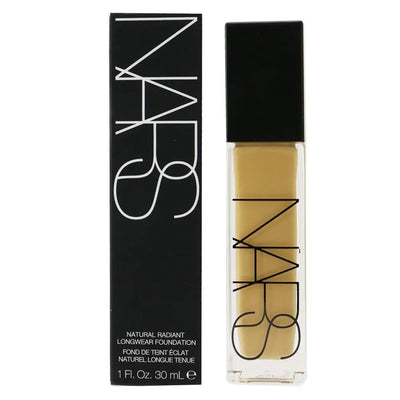
Khayest's NARS radiant foundation page shows multiple undertone families within one foundation range. Compare the listed families before choosing.
Use Virtual Tools as a Starting Point
Use brand shade finders, camera tools, or cross-brand databases to create a shortlist. Good tools reduce the search space. Lighting quality still affects camera-based recommendations.
Take your reference photo in neutral daylight. Avoid filters, strong shadows, and colored room lights.
How to choose foundation shade online still requires a physical dry-down check after delivery. Keep packaging intact until you confirm the shade.
Reduce Risk Before an Online Purchase
Shortlist 2 nearby shades before ordering instead of trusting one automatic recommendation. Compare official swatches, unfiltered customer photos, and undertone labels. Check the retailer's exchange conditions before opening packaging.
How to choose foundation shade online also depends on image quality. Use daylight selfies with no beauty filters when a tool requests a photo. Poor lighting can shift skin color and weaken camera-based suggestions.
Save the exact shade name after a successful purchase. A reliable reference makes future cross-brand matching easier.
Do You Need Different Summer and Winter Foundation Shades?

Yes, many people need different shade depths across the year. How to choose foundation shade changes when sun exposure changes your surface color.
Your undertone usually stays stable while depth changes. Summer can require a deeper shade. Winter can require a lighter shade.
Keep 2 compatible shades when your complexion changes noticeably. Mix both bottles during transitional months. Use exact ratios, such as 1:1 or 2:1, so you can repeat the match.
Do not assume last summer's shade will match every future summer. Check the jawline again.
Can You Mix 2 Foundation Shades?
Yes. Mixing 2 compatible shades can create a closer depth match. How to choose foundation shade sometimes ends with a custom mixture.
Mix a lighter and darker shade from the same formula when your undertone already matches. Start with 1 pump of each shade. Adjust the ratio after checking your jawline.
Do not use shade mixing to hide a major undertone error. A warm-orange foundation mixed with a lighter warm-orange shade remains warm.
Professional pigment mixers, such as blue, green, white, or yellow adjusters, can correct color more precisely. Beginners should make small changes.
Does Coverage Change How Exact Your Shade Must Be?
Yes. Full coverage needs a closer shade match than sheer coverage. How to choose foundation shade should include the opacity you plan to wear.
Full-coverage formulas place more pigment across the face. Small shade differences become easier to see. Sheer foundations and skin tints allow more natural skin color through.
Choose a very close match for full coverage. A slightly flexible match can work with sheer coverage when the undertone stays correct.
Coverage also changes how strongly a wrong shade shows at the jawline. Buildable formulas let you use less pigment for daily wear.
How Can You Choose Foundation Shade Quickly?
To choose foundation shade quickly, follow one repeatable sequence instead of testing random bottles.
|
Task |
Timing |
Method |
Difficulty |
|
Identify depth |
Before swatching |
Choose fair, light, medium, tan, deep, or rich family |
Easy |
|
Identify undertone |
Before swatching |
Compare warm, cool, neutral, and olive clues |
Moderate |
|
Test finalists |
In store |
Blend 3 close shades along jawline |
Easy |
|
Check lighting |
Before buying |
View swatches in indirect daylight |
Easy |
|
Check dry-down |
10–15 minutes |
Compare fresh and dried color |
Easy |
|
Check transition |
After blending |
Compare face, neck, and chest |
Easy |
|
Check seasonal fit |
Every season |
Rematch after major depth changes |
Easy |
|
Check online match |
Before ordering |
Use known shade plus multiple digital references |
Moderate |
How to choose foundation shade becomes faster after you repeat the same sequence. Random swatching wastes time and makes undertone errors harder to diagnose.
What Are the 5 Most Common Foundation Shade Questions?
Should foundation match your hand?
No. Use your hand for rough comparison only. Make the final decision on your jawline, face, and neck.
Can the vein test identify undertone perfectly?
No. Vein color gives one clue, but olive and neutral skin can show mixed vein colors. Confirm with foundation swatches.
Why does every foundation look orange on me?
Excess warmth, excessive depth, or oxidation usually causes an orange result. Compare neutral and olive options within the same depth family.
Should you wait before deciding on a foundation shade?
Yes. Wait at least 10–15 minutes and inspect the dry shade in daylight. Longer sample wear gives more information.
Can you buy foundation online without testing it first?
Yes, but use multiple matching signals. Combine a proven shade, undertone, real swatches, brand charts, and virtual tools before ordering.
How to Choose Your Final Foundation Shade
To choose your final foundation shade, confirm depth, undertone, neck transition, daylight appearance, and dry-down color before buying. How to choose foundation shade becomes predictable when you stop trusting one test. Use jawline swatches, diagnose orange or grey shifts, and rematch after seasonal color changes. Browse the Khayest foundation collection to compare original foundation options across different shades, undertones, finishes, and coverage levels.